Featured

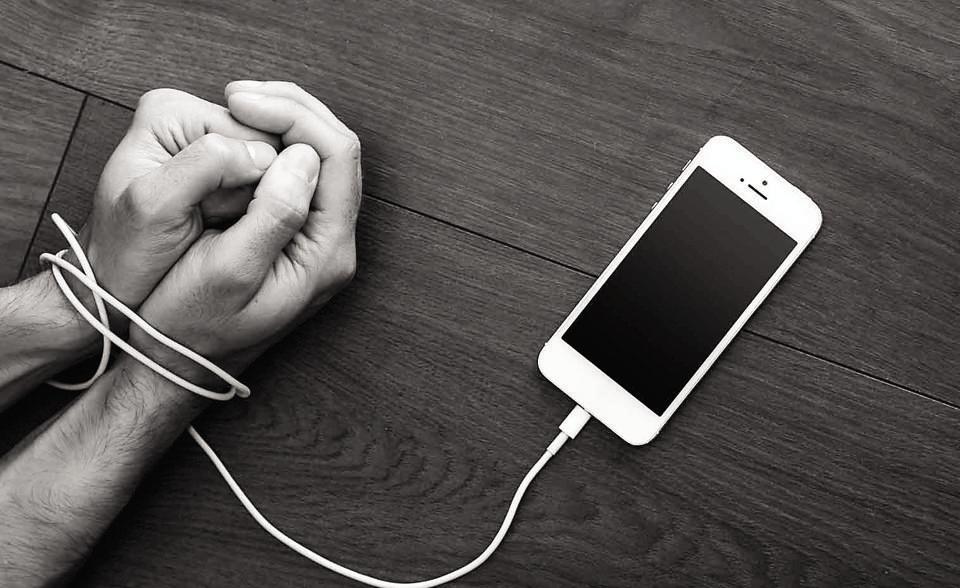
Are you addicted to your phone?

Phone usage has impacted our society in many ways. Is it healthy?

When people think about the world of addiction, you tend to think about the overwhelming heroin epidemic, or how teenagers are addicted to vaping, but have you ever considered your cellphone to be an addiction? In today’s world, it is common to see nearly everyone constantly glued to their phones and detaching themselves from the outside world, some may even say that their phone usage has impacted their mental health. Mental health has become more widely accepted as more and more people are reaching out about their issues.

How You Can Prevent These Issues.

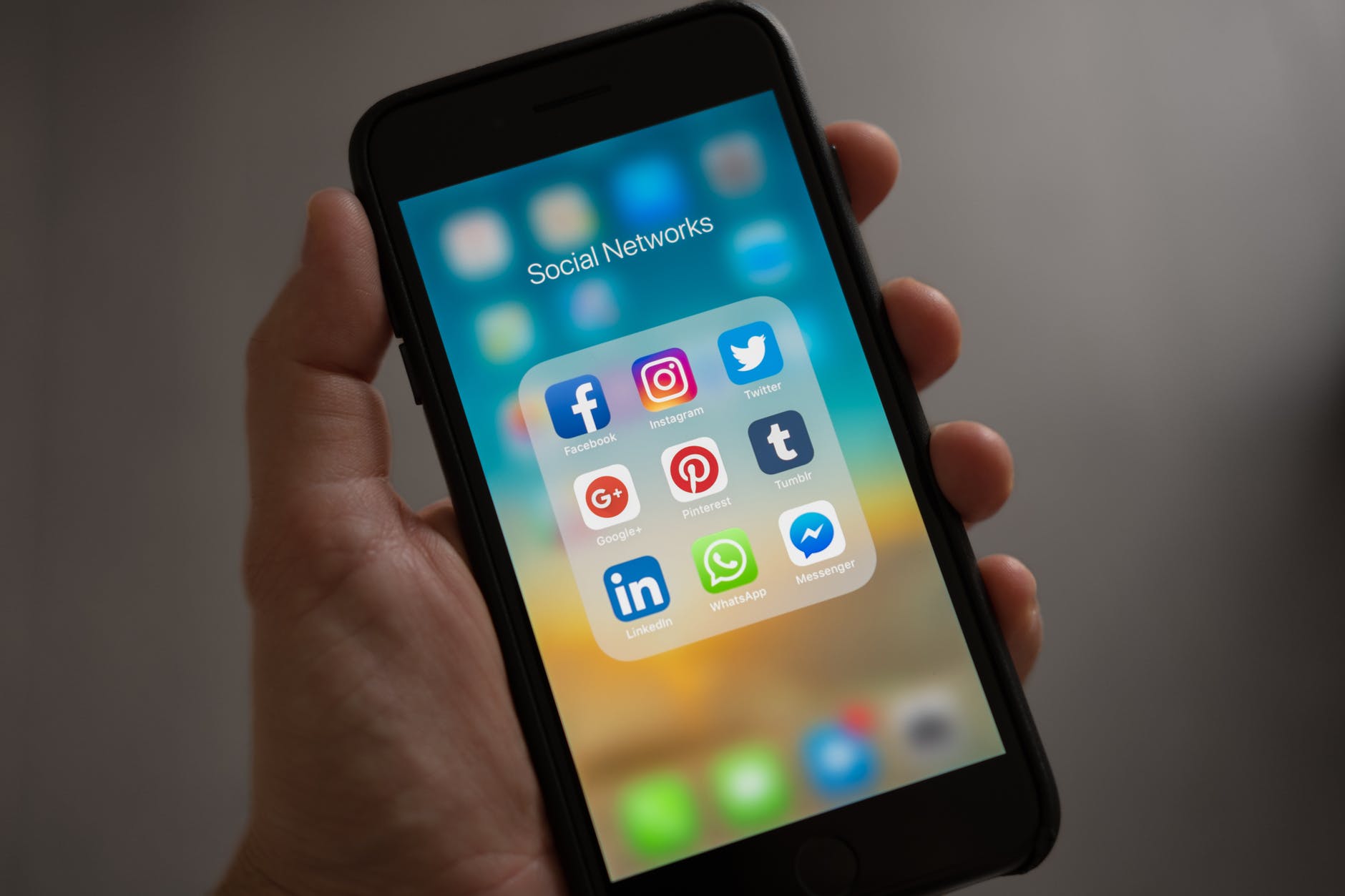
Photo by Tracy Le Blanc on Pexels.com
  • Taking a break from social media: Taking a break can be for a few hours to a week or more.
  • Charge your phone somewhere other than your bedroom: keeping the phone away while attempting to rest will prevent one from staying up for too long.
  • Delete any negative apps: If an app such as Instagram is affecting your thinking on body image, then delete the app.
  • Practice having phone-free zones: Do not allow yourself to use a cell phone at the table or family activities and watching a show, or going to bed.

Are teens depressed because of their phones?

compgroup3's avatarCollaborative Multimodal Project: How Phone Usage Impacts mental Health

In this day and age, teens can spend hours on their cell phones and become alienated by the world. Most teens do this as a way to calm down after a long day, but is it the factor that causes teens to become addicted? According to the International Journal of Mental Health and Addiction, ” Research reports that high alienation can increase smartphoneaddiction“, (Lian, 2018).

Lian, L. (2018). Alienation as Mediator and Moderator of the Relationship Between Virtues and Smartphone Addiction Among Chinese University Students. International Journal of Mental Health & Addiction, 16(5), 1208–1218. https://doi-org.starkstate.idm.oclc.org/10.1007/s11469-017-9842-z

View original post

Why your Phone is bad for your Health

It’s no lie to say you spend too much time on your phone. Every moment you don’t have something to do, you look at your phone. It’s become a natural part of you. But have you ever considered the effects this could have on your health- particularly your mental health? In 2016, a study by the University of Illinois found links to anxiety and depression with high cellphone use. They surveyed over 300 university students and found that “People who self-described as having really addictive-style behaviors toward the Internet and cellphones scored much higher on depression and anxiety scales.” On top of that, as well, phone use has been found to negatively affect sleep patterns. Phones emit what is known as “blue light.” Blue light, according to the Lighting Research Center, denies our melatonin levels from increasing when we try to sleep. Without melatonin, our brain cannot properly go into rest, thus affecting our amount of actual rest when we sleep.

Are you lacking Sleep Due to Your Cell Phone?

Have you ever laid awake watching YouTube videos until the waking hours of the sun? Many phone users have lost sleep from spending too much time on their phones. Adolescents have an alarming issue with playing on their phones instead of sleeping. Those using their cell phones at night are lacking sleep, causing sleep deprivation. When one lacks an appropriate amount of sleep, it “disrupts the brain’s ability to balance emotions and thinking abilities, and increases the chances of developing chronic medical problems.”said by Preety, R., Devi, R. G., & Priya, A. J.

Preety, R., Devi, R. G., & Priya, A. J. (2018). Sleep deprivation and cell phone usage among teenagers. Drug Invention Today, 10(10), 2073–2075. Retrieved from http://search.ebscohost.com.starkstate.idm.oclc.org/login.aspx?direct=true&db=a9h&AN=131602202&site=ehost-live

Adolescents Mental Health At Greater Risk From Phone Usage?

Cell phones have a major impact on all users,but out of everyone adolescents face more risks of mental health effects. With adolescents not being supervised or controlled on cell phone use, causes “negative mental and  behavioral  problems  such  as  Internet  addiction, inappropriate online behaviors, decreased face to ‐face communication and social anxiety, loneliness, depression and suicidal ideation, narcissistic personality disorder, and low self‐esteem”According to Calpbinici, P., & Tas Arslan, F.

Calpbinici, P., & Tas Arslan, F. (2019). Virtual behaviors affecting adolescent mental health: The usage of Internet and mobile phone and cyberbullying. Journal of Child & Adolescent Psychiatric Nursing, 32(3), 139–148. https://doi-org.starkstate.idm.oclc.org/10.1111/jcap.12244

Fun Fact

Do you know how much time we really spend on our phones everyday?

Did you know that the average time spent during the day on a cell phone and tablet combined is 4 hours a 33 minutes. That is a large portion of time wasted playing videos game or scrolling through social media. In fact, it was found that the average smart phone user will tap, click, or swipe their phone an average of 2,617 times per day!

Turner, A. (2019, November 18). Smartphone Addiction & Cell Phone Usage Statistics in 2019. Retrieved from https://www.bankmycell.com/blog/smartphone-addiction/#chapter2.

Are teens depressed because of their phones?

In this day and age, teens can spend hours on their cell phones and become alienated by the world. Most teens do this as a way to calm down after a long day, but is it the factor that causes teens to become addicted? According to the International Journal of Mental Health and Addiction, ” Research reports that high alienation can increase smartphone addiction“, (Lian, 2018).

When a teen is in an alienated position, they tend to do things they normally wouldn’t. It is a parent’s worst fear to see their children in a low state, and with obsessive phone usage this nightmare can become a reality. It is important to set a limit for the amount of time an individual is on their phone, or even to be aware of how much time they are wasting.

Lian, L. (2018). Alienation as Mediator and Moderator of the Relationship Between Virtues and Smartphone Addiction Among Chinese University Students. International Journal of Mental Health & Addiction, 16(5), 1208–1218. https://doi-org.starkstate.idm.oclc.org/10.1007/s11469-017-9842-z

Introduce Yourself (Example Post)

This is an example post, originally published as part of Blogging University. Enroll in one of our ten programs, and start your blog right.

You’re going to publish a post today. Don’t worry about how your blog looks. Don’t worry if you haven’t given it a name yet, or you’re feeling overwhelmed. Just click the “New Post” button, and tell us why you’re here.

Why do this?

  • Because it gives new readers context. What are you about? Why should they read your blog?
  • Because it will help you focus you own ideas about your blog and what you’d like to do with it.

The post can be short or long, a personal intro to your life or a bloggy mission statement, a manifesto for the future or a simple outline of your the types of things you hope to publish.

To help you get started, here are a few questions:

  • Why are you blogging publicly, rather than keeping a personal journal?
  • What topics do you think you’ll write about?
  • Who would you love to connect with via your blog?
  • If you blog successfully throughout the next year, what would you hope to have accomplished?

You’re not locked into any of this; one of the wonderful things about blogs is how they constantly evolve as we learn, grow, and interact with one another — but it’s good to know where and why you started, and articulating your goals may just give you a few other post ideas.

Can’t think how to get started? Just write the first thing that pops into your head. Anne Lamott, author of a book on writing we love, says that you need to give yourself permission to write a “crappy first draft”. Anne makes a great point — just start writing, and worry about editing it later.

When you’re ready to publish, give your post three to five tags that describe your blog’s focus — writing, photography, fiction, parenting, food, cars, movies, sports, whatever. These tags will help others who care about your topics find you in the Reader. Make sure one of the tags is “zerotohero,” so other new bloggers can find you, too.


Design a site like this with WordPress.com
Get started